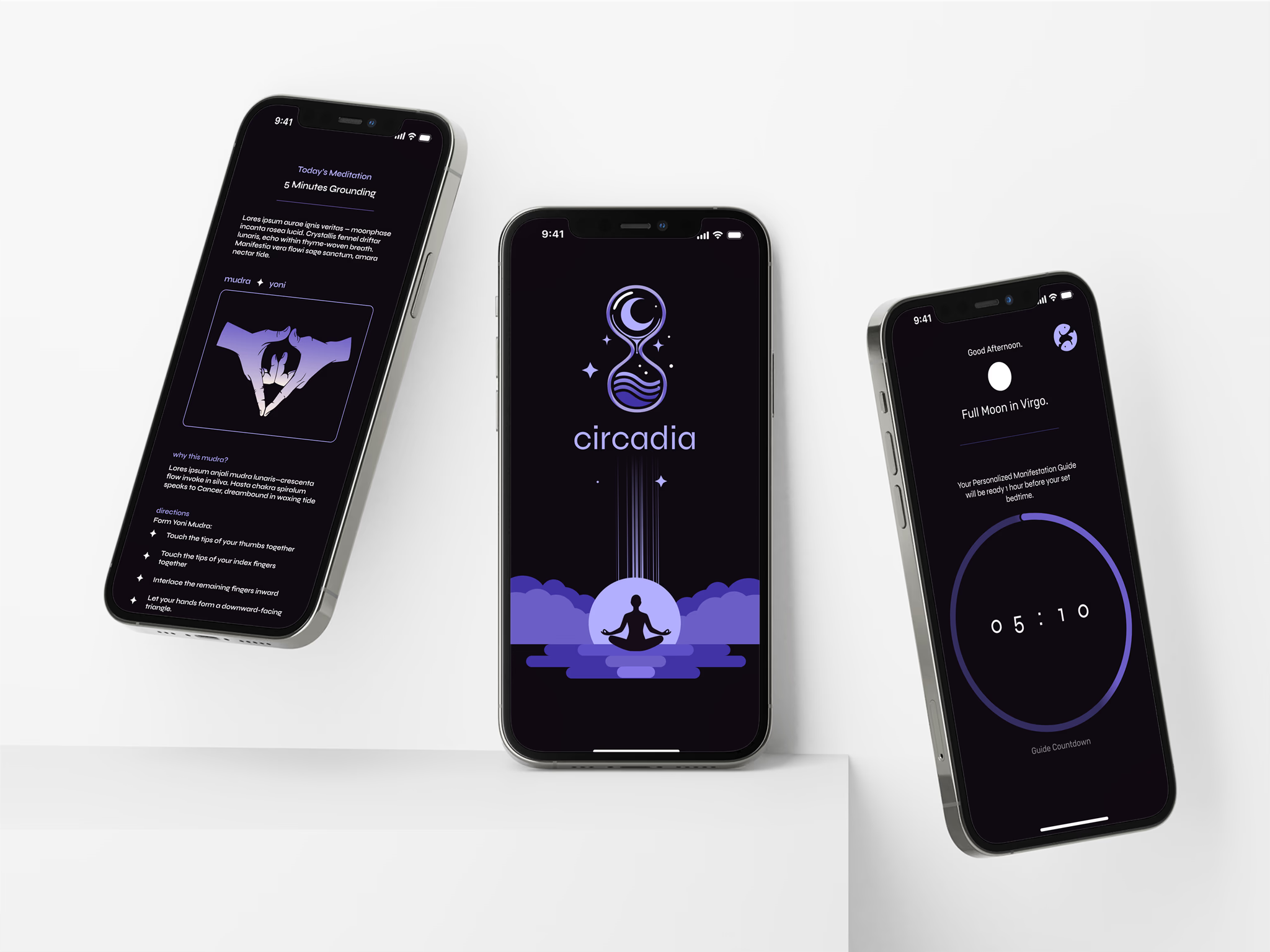
The Challenge: From Dream Journal to Digital Ritual
Circadia began with a simple premise: a digital dream journal. However, the vision quickly evolved. The true challenge wasn't just to build a tool for recording dreams, but to create an immersive pre-sleep ritual that could help people disconnect, wind down, and manifest their intentions.
Original Concept
A simple, functional dream journal for recording nightly events.
Realized Vision
An immersive pre-sleep ritual that makes bedtime feel sacred, not transactional.
The Core Design Challenge
How do you design a mobile app that helps people disconnect from their digital lives? The goal was to respect the liminal space between waking and sleeping, using technology to escape technology.
My Role: Sole Designer & UX Architect
1. Product Identity & Visual System
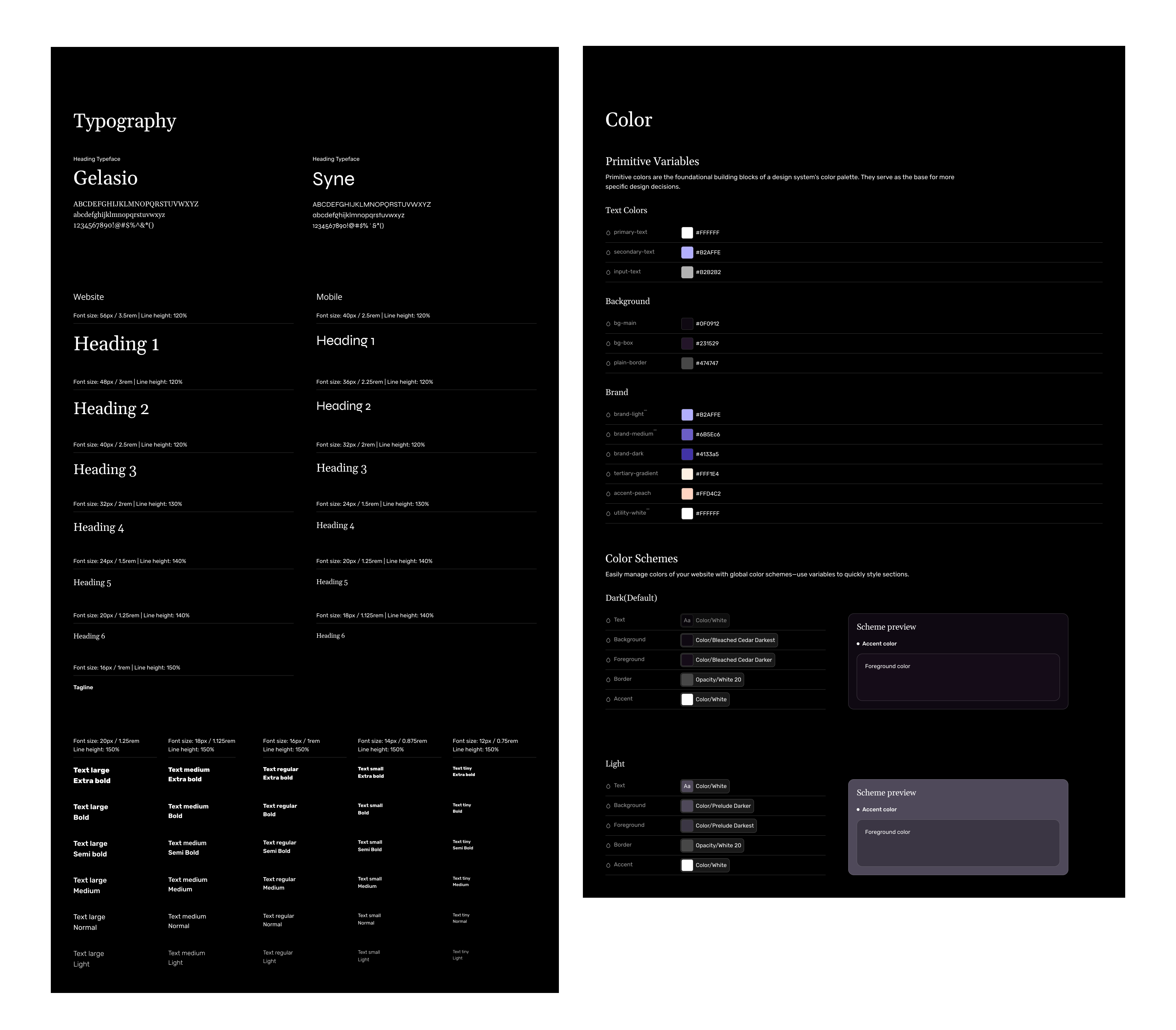
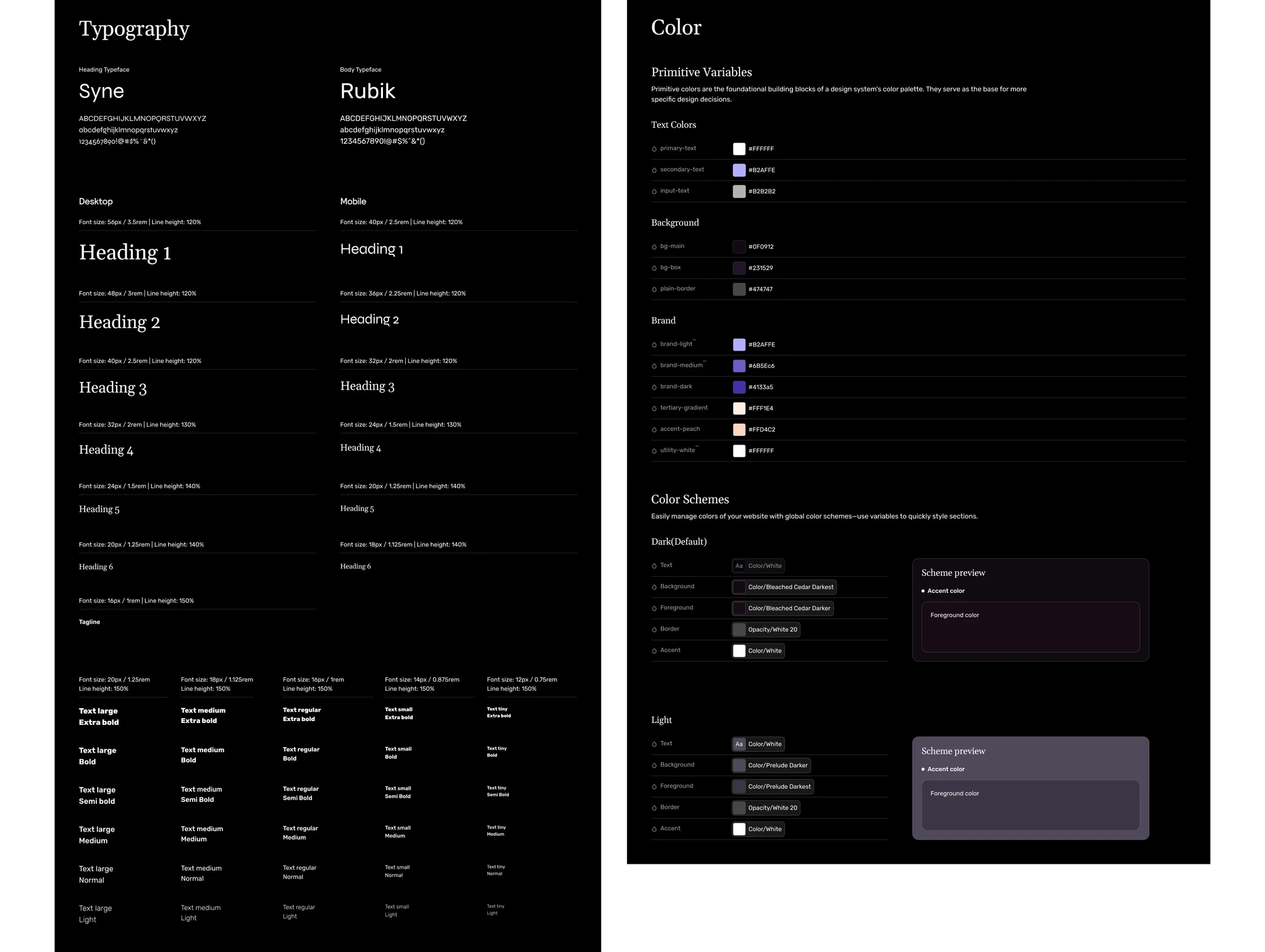
As the sole designer, I had complete ownership of the visual direction and user experience. I created the entire visual system from the ground up in Illustrator, including a comprehensive 40+ token design system to ensure clarity and scalability.
Why? A strong, coherent design system was crucial for a small team to build a polished, high-quality experience quickly and consistently.
2. User Experience & Flow Design
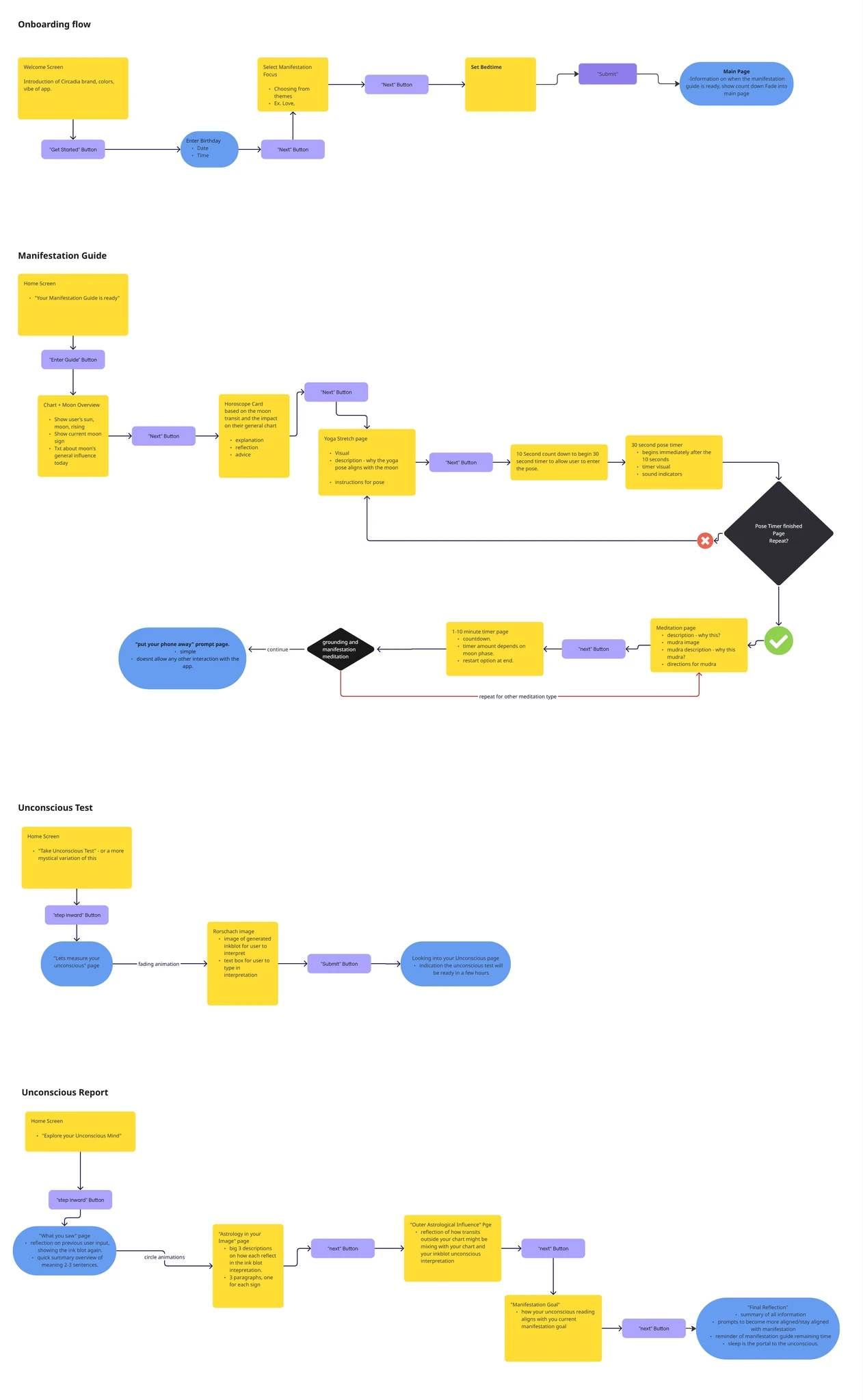
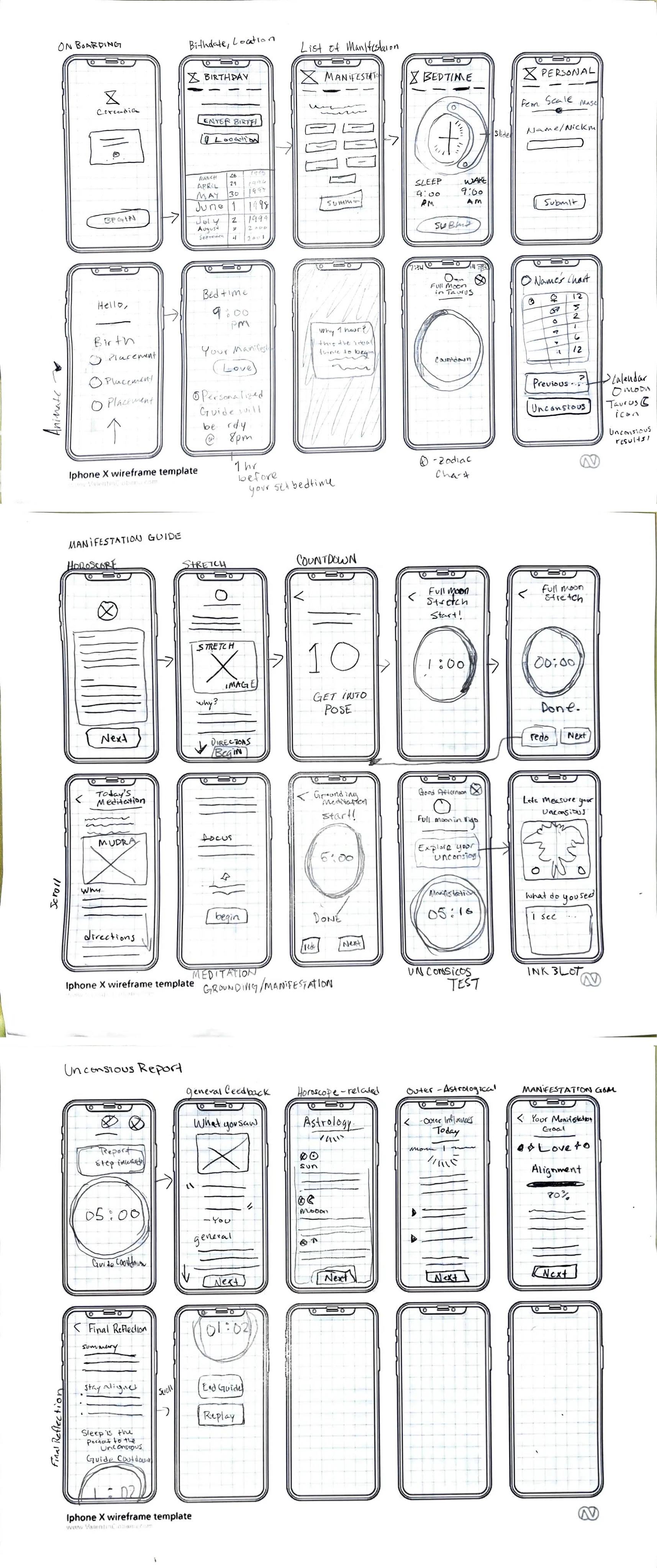
I designed all user flows, from the unique onboarding sequence to the manifestation guides and unconscious tests. The key was to make every interaction feel calm, gentle, and intentional, replacing traditional UI patterns with a more fluid, emotionally resonant experience.
Result: A seamless, meditative onboarding flow that achieved a 100% completion rate in beta testing, with zero traditional login screens.
3. Custom Animation & Microinteractions
To carry the emotional weight of the experience, I built over 15 custom animations in Rive. These weren't just decorative; they were core to the UX, creating seamless transitions and subtle microinteractions that guided the user without demanding their attention. The goal was to honor the sacred transition between waking and sleeping.
4. UX Strategy & Stakeholder Collaboration
The project involved fast-paced stakeholder demands and a constantly evolving scope. I led the UX strategy, successfully advocating for a shift away from a data-collection mindset towards a trust-building one. This involved transforming the onboarding from a transactional gateway into the first step of the bedtime ritual itself.
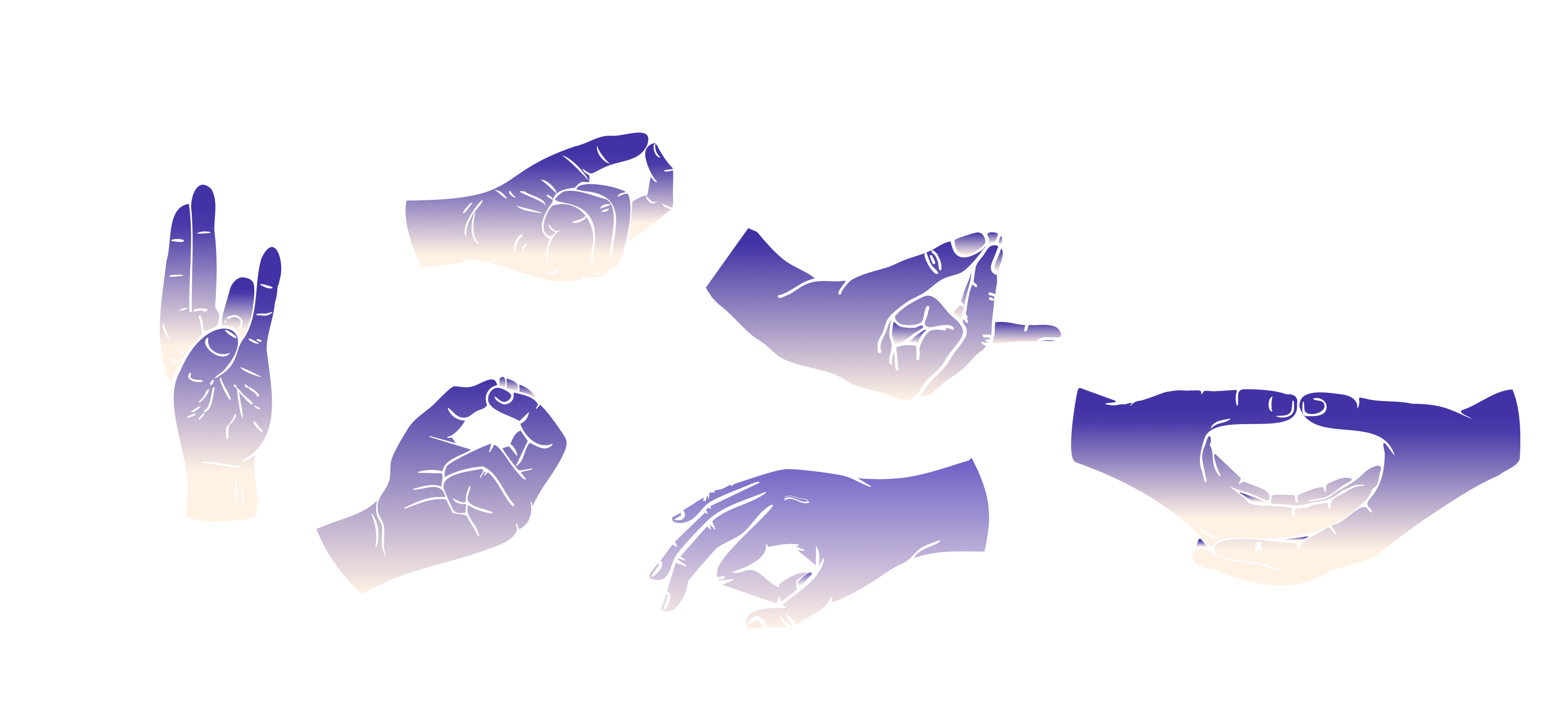
Design System & Visual Identity

User Flows & Wireframes
Custom Animations
Over 15 custom animations built in Rive for seamless transitions
App Interface
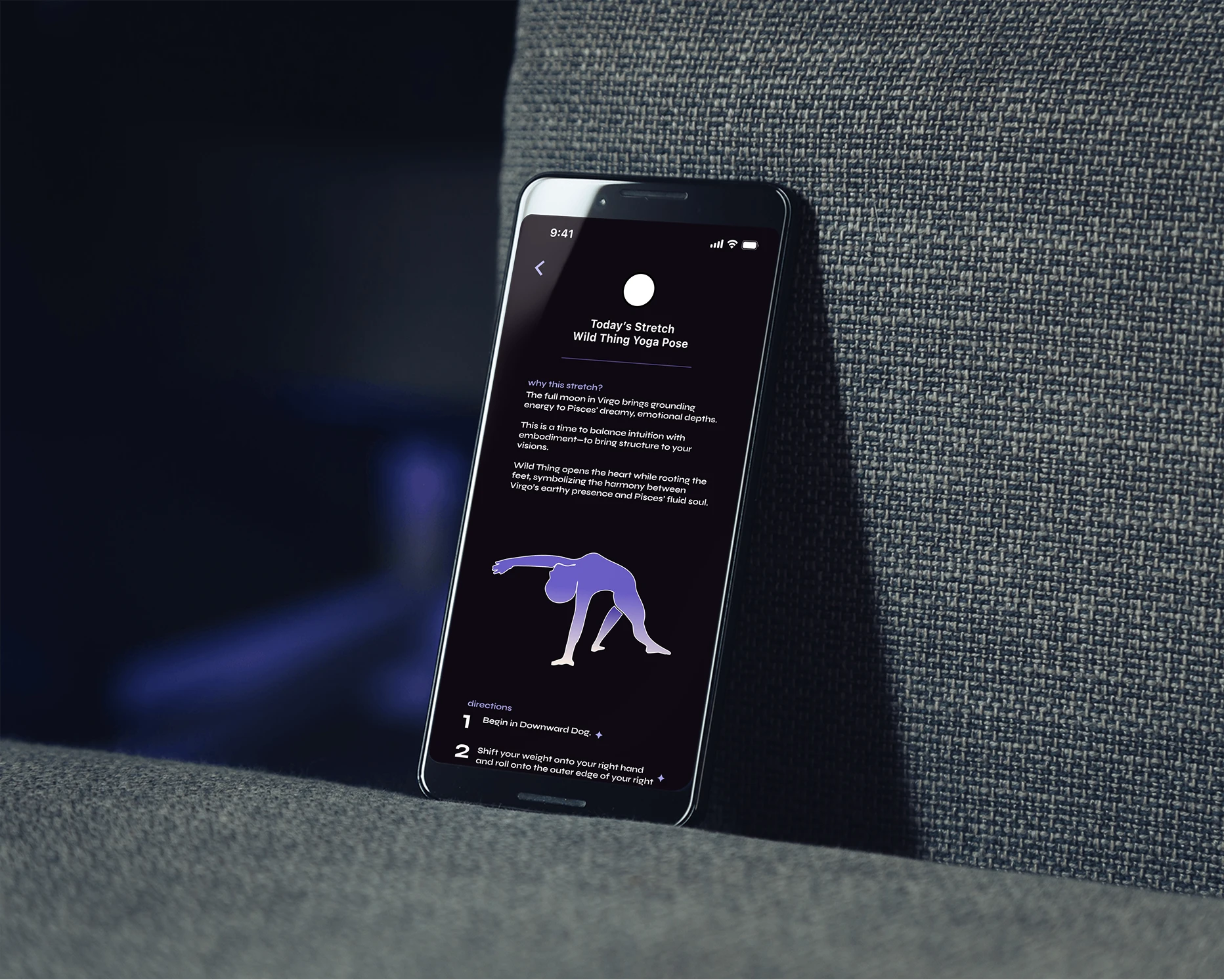
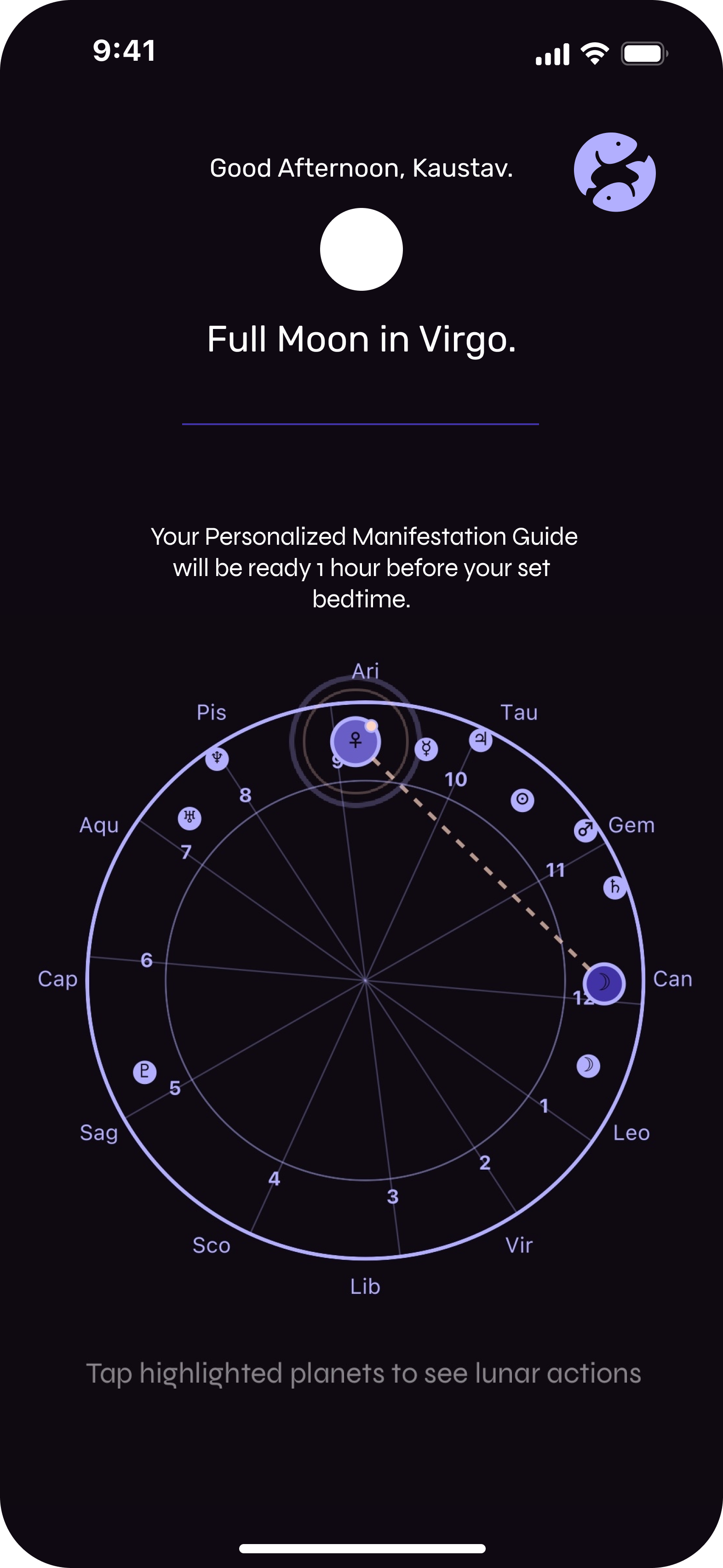
"The design philosophy was lightweight minimalism. Every element needed to feel soft, simple, and intentional—creating a calming interface that invites rest rather than demands attention.
"
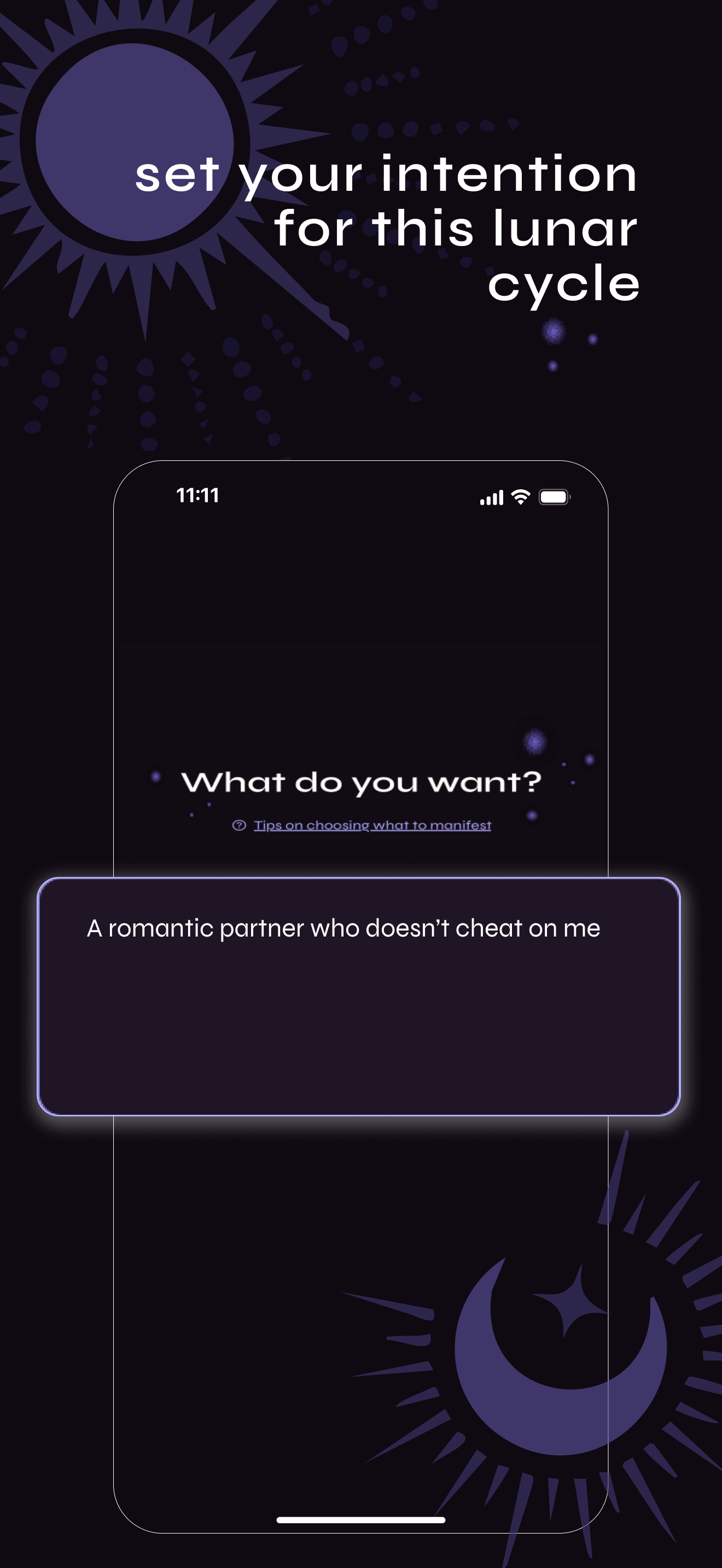
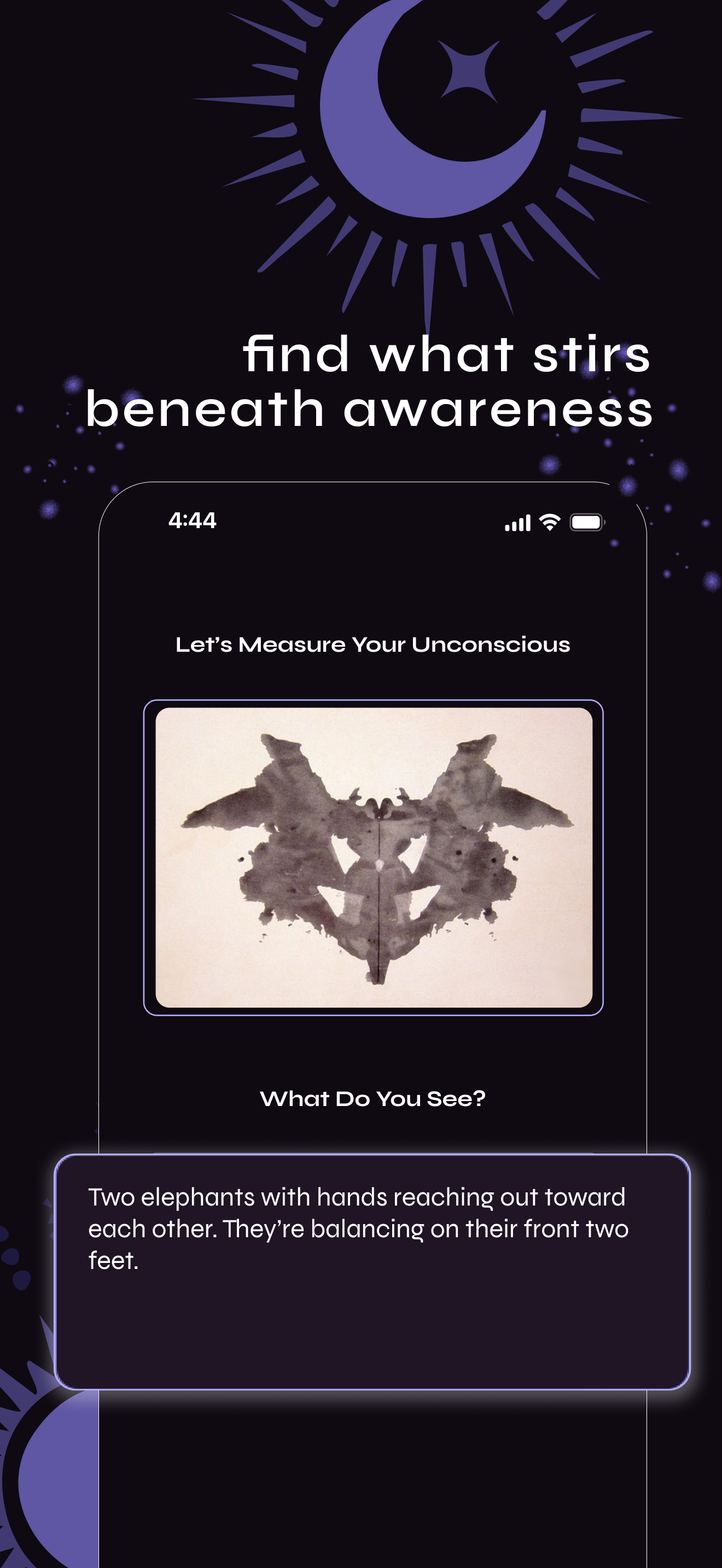
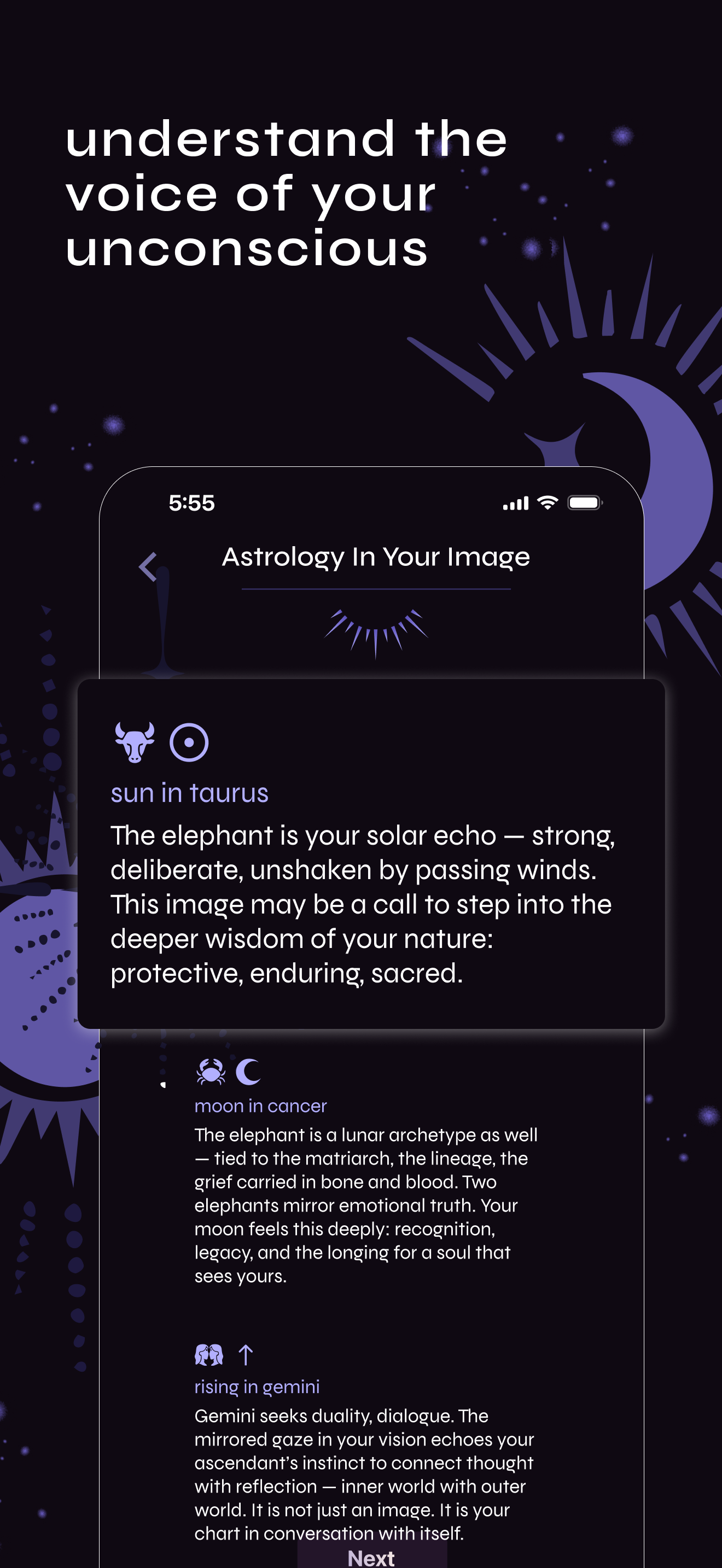
App Store Screenshots


Lessons Learned
This project was a lesson in designing for emotion and intention under tight constraints. It was part-time work alongside a full-time role, but the vision remained clear.
More conceptual exploration early: Given more time, I would have dedicated a specific phase to divergent thinking and broad vision exploration before diving into high-fidelity designs. This could have uncovered even more innovative approaches.
AI-accelerated iteration: The pace of the project would have benefited from leveraging modern AI tools to rapidly prototype and test different visual concepts and user flows, getting feedback faster.
The power of a clear vision: Despite changing requirements and constraints, having an unwavering goal—"build something that feels like a ritual, not just an app"—was the anchor that kept the project focused and coherent.
